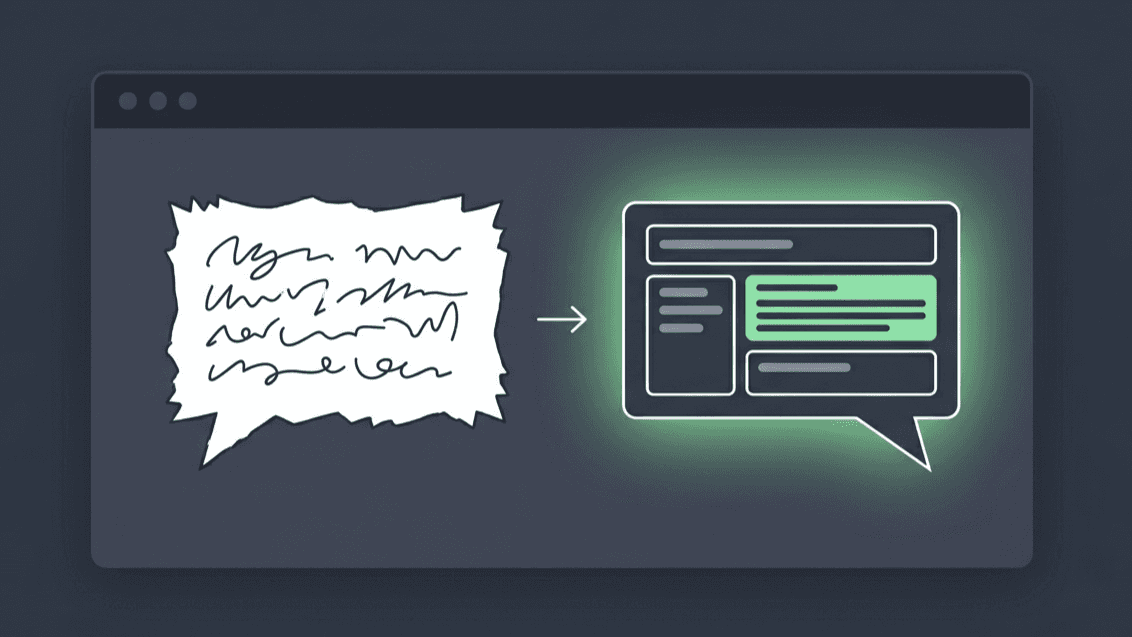
The short answer: Prompt engineering is the practice of writing clear, structured instructions for AI tools to get better, more accurate, and more useful outputs. It is not a technical skill — it is a communication skill. And it is quickly becoming one of the most valuable things anyone who works with AI can learn.
If you have ever typed something into ChatGPT, received a mediocre answer, and wondered whether you were doing something wrong — you were probably encountering the results of poor prompting. The AI was not broken. The instruction was just not specific enough for the AI to know what you actually needed.
This guide explains what prompt engineering is, why it matters, and how to do it — with practical examples you can apply immediately.
Why the Same AI Gives Wildly Different Results to Different People
One of the most striking things about using large language models is how differently two people can experience the same tool. One person uses ChatGPT and finds it transformatively useful. Another uses it for a week and concludes it is overhyped. Very often, the difference comes down entirely to how they are asking questions.
AI language models are trained to predict the most useful continuation of whatever text they receive. The quality of that prediction depends heavily on how much context, specificity, and structure is in the original input. A vague prompt produces a generic response. A specific, well-structured prompt produces a focused, useful one.
This is not a flaw in the technology — it is how the technology works. And once you understand it, you gain genuine control over your results.
What Prompt Engineering Actually Is
Prompt engineering is the discipline of crafting inputs to AI systems in ways that reliably produce high-quality outputs.
The word "engineering" might suggest something technical, but it is misleading. Prompt engineering is fundamentally about communication — about being clear about what you want, giving the AI the context it needs, and structuring your request in a way that reduces ambiguity.
The best mental model is to think of the AI as an extremely capable but quite literal assistant who has read almost everything ever written but knows nothing specific about you, your business, your audience, or your goals unless you tell them. If you walk into a new employee's office and say "write me a report," you should not be surprised if the result misses the mark. If you say "write me a two-page summary of our Q3 sales performance, written for our board of directors, focusing on why we missed our target in the enterprise segment and what we are doing to address it in Q4," you will get something far more useful.
Prompt engineering is the discipline of learning how to give the second kind of instruction every time.
The Core Principles of a Good Prompt
1. Be Specific About the Output You Want
The most common mistake in prompting is being too vague. Instead of asking an AI to "summarise this article," tell it how long the summary should be, who the audience is, and what format you want it in.
Weak prompt: "Summarise this article." Strong prompt: "Summarise this article in three bullet points, each no longer than two sentences. The audience is a non-technical executive who needs to understand the main business implications."
2. Give the AI a Role
Language models respond well to being given a specific perspective to write from. Assigning a role — "you are an experienced financial analyst," "you are a senior software engineer reviewing code for a junior developer," "you are a marketing strategist helping a B2B SaaS company" — activates relevant patterns from the model's training and produces more targeted outputs.
Without role: "Review this marketing copy." With role: "You are a direct response copywriter with fifteen years of B2B experience. Review this marketing copy and identify the three weakest sentences and explain how to improve each one."
3. Provide Relevant Context
AI models have no knowledge of your specific situation unless you tell them. The more relevant context you provide — your industry, your audience, your constraints, what you have already tried — the more tailored the output will be.
Without context: "Write a subject line for a sales email." With context: "Write five subject line options for a cold sales email targeting HR directors at mid-sized UK logistics companies. The email is about a workforce scheduling software that reduces overtime costs. The tone should be professional but not formal. Avoid questions and clickbait."
4. Specify Format and Length
If you want a structured response — bullet points, numbered lists, a table, a specific word count — say so explicitly. If you do not specify, the model will make its own formatting choices, which may not match what you need.
5. Ask for Step-by-Step Reasoning on Complex Problems
For analytical tasks — working through a business problem, evaluating a decision, solving a complex question — asking the AI to "think step by step" or "walk through your reasoning" consistently produces more accurate and reliable outputs. This technique, known as chain-of-thought prompting, dramatically reduces errors on problems that require sequential logic.
Practical Prompt Templates You Can Use Today
For summarising long documents: "Summarise the following [document/article/report] in [X] bullet points. Each point should be no longer than [X] words. The reader is [describe audience]. Focus on [specific aspect if relevant]."
For generating first drafts: "You are a [role]. Write a [format] about [topic] for [audience]. The tone should be [tone description]. Length: approximately [word count]. Include: [specific elements to include]. Avoid: [specific things to avoid]."
For analysis and decision support: "I need to decide between [option A] and [option B]. Here is the relevant context: [provide context]. Think through the key considerations step by step and give me your assessment of which option is stronger and why."
For improving existing content: "Review the following [text]. I want you to identify: (1) the three weakest sentences and explain why they are weak, (2) any factual claims that should be verified, (3) two specific suggestions to make the opening paragraph more compelling. Here is the text: [paste text]."
For generating ideas: "You are a [relevant expert]. Generate [number] ideas for [specific goal]. For each idea, give it a title, a one-sentence description, and one potential challenge to consider. Context: [provide relevant context about your situation]."
Common Mistakes to Avoid
Treating every failed output as the AI's fault. The AI's output is a reflection of your input. Before deciding a tool is not useful, ask whether your prompt was specific enough, gave enough context, and was clear about what a good response would look like.
Accepting the first output without iterating. Prompt engineering is a conversation, not a single transaction. If the first response misses the mark, refine your prompt, add more context, or ask the AI to revise its answer with specific feedback about what to change.
Writing prompts in the way you would search Google. Search engines are designed for short keyword queries. AI language models work best with full sentences that provide rich context. The more you write like you are giving instructions to a capable person, the better your results.
Forgetting to specify what you do not want. Being explicit about what to avoid — a particular tone, specific jargon, a format you dislike, assumptions you do not want the AI to make — is just as valuable as specifying what you do want.
Why This Skill Matters More Than Most People Realise
As AI tools become embedded in more workflows — writing, analysis, research, customer communication, code, design — the ability to instruct them clearly becomes a core professional competency, not a niche skill.
The gap between someone who gets mediocre results from AI tools and someone who gets exceptional results is almost entirely explained by prompting quality. The tools are the same. The difference is in how clearly and completely the person is communicating what they need.
Prompt engineering is, at its core, the skill of thinking precisely about what you want and communicating that clearly. Those are skills that make people more effective in every domain — AI just makes the feedback loop fast enough to learn from immediately.
Key Takeaways
- Prompt engineering is the practice of writing clear, structured instructions for AI tools to get consistently better outputs. It requires no technical background.
- The most common reason people get poor results from AI is not a limitation of the tool — it is a lack of specificity, context, or structure in the prompt.
- The core principles: be specific about output, assign the AI a role, provide relevant context, specify format and length, and ask for step-by-step reasoning on complex problems.
- Prompt engineering is an iterative skill. Treat AI interactions as a conversation, refine based on what you get, and improve over time.
- As AI tools become more central to professional work, the ability to communicate clearly with them will become one of the most valuable skills in almost any role.
Frequently Asked Questions
Do I need to learn programming to do prompt engineering? No. Prompt engineering is a writing and communication skill, not a programming skill. The most effective prompts are written in plain English. No code required.
Is prompt engineering going to become obsolete as AI improves? The specific techniques will evolve, but the underlying skill — being clear and precise about what you want — will remain valuable regardless of how sophisticated the AI becomes. Better models are more forgiving of poor prompts, but they are still dramatically more effective when given clear context and specific instructions.
How long does it take to get good at prompt engineering? Most people see significant improvement within a few days of deliberate practice. The feedback loop is immediate — you write a prompt, see the output, refine, and repeat. Unlike most technical skills, there is no prerequisite knowledge required, which means the learning curve is unusually fast.